

5 Lessons the 2026 FIFA World Cup Can Teach Community Sport
The 2026 FIFA World Cup took the biggest stage in sport for a 39-day period from June 11 to July 19. It might be over, but we're still taking in the lessons it's taught us. From keeping the door open to players of every background to tech that's changing how fans connect with the game, the world's biggest tournament is a mirror for what we're building every day in community sport and here’s what we can learn from it.
Lesson 1: Keep the door open

This year's tournament expanded to 48 teams, nearly a quarter of FIFA's 211 member nations. That opened the door for football nations across Africa, Asia, the Caribbean, and the Middle East that had little chance of qualifying under the old 32 team format.
Australia's own squad told that story well. Mohamed Toure was born in a refugee camp in Guinea after his family fled war in Liberia, Nestory Irankunda, born in a refugee camp in Tanzania, went on to become the Socceroos' youngest ever World Cup scorer, and Awer Mabil was born in the Kakuma refugee camp in Kenya before finding his way onto a football pitch, and eventually a World Cup squad.
Then there was Vozinha. At 40 years old, Cape Verde's goalkeeper became the oldest player to appear in a nation's World Cup debut match, and shut out Spain in the process. A proud reminder that age isn't a barrier, and that a nation of 500,000 people can hold its own against the biggest names in football.
These stories aren't just inspiring, they're a reminder of what sport should be: open to anyone, regardless of where they started. That's the same principle behind PlayHQ. Keeping registration, participation, and pathways open to every age and background at the grassroots level, not just the elite pipeline.
Lesson 2: Use tech to connect fans to the game
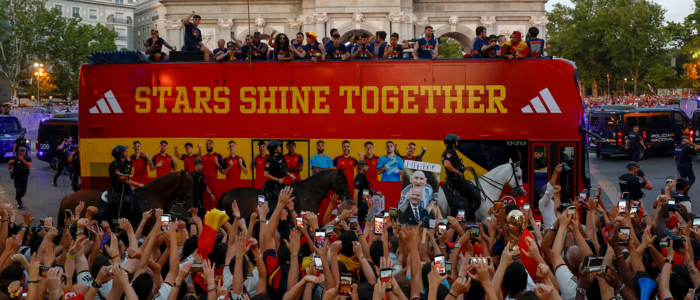
Highlights spread across social media in real time this tournament, turning moments like Vozinha's save into global stories overnight (his Instagram following jumped from 50,000 to 21.5 million). FIFA's official World Cup app gave fans live scores, schedules, stats, host city guides, and 3D stadium maps. Live streaming brought every match to fans who couldn't get a ticket or weren't near a TV, watching from a phone, laptop, or a screen at the local pub just as easily as from the stands.
Just as fans leaned on the official FIFA apps to stay connected to every match, PlayHQ's apps gives grassroots clubs and parents that same always-on visibility, draws, results, live scores. And through our live streaming partners, even a Saturday morning grassroots match can be watched by grandparents interstate or a parent stuck at work, so community sport feels just as connected as the World Cup.
Lesson 3: Build the infrastructure behind the investment

This tournament is on track to be FIFA's most financially successful yet, with revenue nearing $11 billion, driven by broadcasting, ticketing, and sponsorship scaling with the expanded format. That scale is exactly why a share of that prize pool gets redirected into grassroots development, training facilities, and referee education across FIFA's 211 member federations, helping smaller football nations stay competitive from one cycle to the next.
It mirrors something we believe at PlayHQ: investment only lands well when you know where to put it, and that starts with participant data. Every registration, every game, every season tracked on PlayHQ builds a clearer picture of where community sport is growing, where it's stretched thin, and where support would make the biggest difference. That's the digital foundation we focus on: giving governing bodies the insights to know where investment should go, and the infrastructure to make it count locally, every season.
Lesson 4: Schedule at scale, without the guesswork
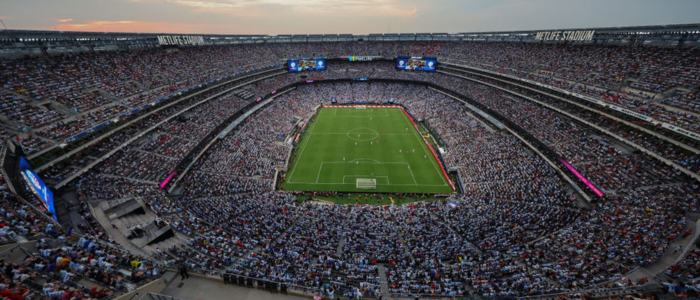
Building a fixture list for 104 matches across 16 cities in three countries is no small task. FIFA used a mix of Operations Research algorithms and Mixed-Integer Programming alongside AI-assisted planning to build a schedule that balanced stadium availability, team rest days, travel distances, and broadcast windows, all without a fan ever noticing the complexity behind it.
PlayHQ's competition management and fixture tools apply that same logic at grassroots scale, taking the guesswork and manual admin out of building a local season so clubs and leagues can focus on running it, not building it.
Lesson 5: Reduce admin, make more room for play

Behind every match sat a massive operational machine, but a lot of it was quietly automated. FIFA used barcode and QR code technology across digital ticketing, stadium access, accreditation, transportation, and merchandise, so tens of thousands of volunteers, media, and staff could move through venues without manual check-ins slowing anything down. Volunteers themselves tracked shifts through a dedicated app rather than paperwork or phone calls. None of it got any airtime, but it's what made the World Cup smooth sailing without the admin ever becoming visible to fans or players.
Community sport carries that same weight, just without FIFA's budget or scale. It's volunteers sorting draws, chasing registration payments, and juggling texts about who's turning up, usually on top of their day job. This is where PlayHQ comes in: by digitising registration, payments, competition management, and game day admin, we do for community sporting organisations what FIFA's tech did for its stadiums, take the manual admin out of the picture so the focus shifts back to the game. Less time on spreadsheets, more time to play.
The takeaway
The World Cup is a mirror for what grassroots sport should aspire to: open doors, connected fans, smart systems, real investment, and more time to play. That's the vision PlayHQ brings to community sport, every weekend, not just once every four years.
Find out more about PlayHQ's game changing tech that's helping global networks of grassroot sports grow. Book a demo with our team to explore.


%20(1).png)


.png)